If there's one concept that trips up more new international traders than any other, it's Incoterms. These standardized trade terms define exactly who is responsible for what at each stage of the shipping process—who pays freight, who insures the cargo, when risk transfers from seller to buyer, and what documentation is required. Misunderstanding Incoterms can result in unexpected costs, delayed shipments, and damaged business relationships. This guide will give you practical knowledge to use Incoterms correctly and confidently.
What Are Incoterms and Why Do They Matter?
Incoterms (short for International Commercial Terms) are a set of pre-defined trade terms published by the International Chamber of Commerce (ICC). They're recognized worldwide and used in international sales contracts to clarify the responsibilities of buyers and sellers. The current version is Incoterms 2020, which became effective on January 1, 2020, replacing the previous 2010 version.
The primary purpose of Incoterms is to reduce misunderstandings by providing clear, internationally recognized definitions for common commercial practices. When both parties understand that "FOB Shanghai" means the same thing regardless of whether the buyer is in New York, London, or Dubai, it eliminates confusion and disputes. This standardization benefits everyone involved in international trade.
However, Incoterms have important limitations that traders must understand. They don't constitute a complete sales contract—they only address certain aspects of the sale, primarily delivery and risk transfer. They don't cover payment terms, ownership transfer, or product warranties. They're also not law; they only apply when both parties agree to use them in their contract.
The Major Incoterms Explained
Incoterms are organized into two categories: rules for any mode of transport and rules for sea and inland waterway transport. Understanding which category applies to your shipment matters because some terms appear in both groups but have different meanings.
EXW - Ex Works
Ex Works (EXW) places maximum responsibility on the buyer and minimum obligation on the seller. Under EXW, the seller's only obligations are to make goods available at their premises and provide basic assistance with export documentation. The buyer bears all risks and costs of transporting goods from the seller's location to the final destination, including export clearance, freight, insurance, and import clearance.
This term benefits sellers who want minimal involvement in logistics, but it places significant burden on buyers, particularly those without international shipping experience. For this reason, EXW is often combined with additional services purchased from the seller or freight forwarder to ensure smooth transportation.
FOB - Free on Board
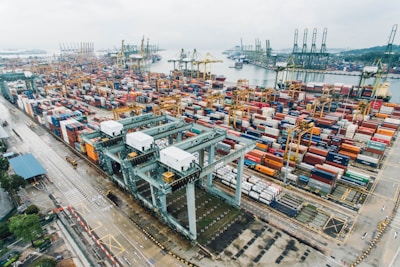
Free on Board (FOB) is one of the most commonly used Incoterms, particularly for ocean shipments. Under FOB, the seller's responsibility ends when goods pass the ship's rail at the named port of shipment. This means the seller arranges and pays for transportation to the port, export clearance, and loading onto the vessel. Once goods are on board, all risks transfer to the buyer, who then assumes responsibility for ocean freight, insurance, unloading, import clearance, and final delivery.
Buyer beware: the phrase "pass the ship's rail" sounds simple but has been the source of countless disputes. In practice, when goods are lifted from the dock to the ship, risk technically transfers at the rail. But if goods are damaged during loading before they cross the rail, the seller bears responsibility. Clear communication and documentation of condition at each transfer point prevents arguments later.
CIF - Cost, Insurance, and Freight
Cost, Insurance, and Freight (CIF) is similar to CFR (Cost and Freight) but includes insurance coverage. Under CIF, the seller delivers goods on board the vessel, pays costs and freight to bring goods to the destination port, and provides minimum insurance coverage against the buyer's risk during carriage. Risk transfers to the buyer when goods are on board the ship at the port of shipment.
The insurance requirement is often misunderstood. CIF requires the seller to obtain insurance only at minimum coverage (typically 110% of cargo value under Institute Cargo Clauses). Buyers who need higher coverage must arrange additional insurance themselves. This is a common oversight—buyers assume CIF insurance fully covers their risk when it may not.
DDP - Delivered Duty Paid
Delivered Duty Paid (DDP) represents the opposite extreme from EXW. Under DDP, the seller assumes maximum responsibility, delivering goods to the destination with import duties and taxes paid. The seller's obligations include arranging all transportation, export clearance, import clearance, and paying all duties and taxes through to the named place of destination.
DDP is advantageous for buyers because it provides complete clarity about total landed costs—they know exactly what they'll pay, nothing more. This makes pricing and budgeting easier. However, sellers must understand that DDP in some countries (particularly the United States) requires having a presence in the buyer's country to legally handle import clearance. Not all sellers can fulfill DDP obligations without significant logistical support.
Choosing the Right Incoterm
Selecting the appropriate Incoterm depends on several factors: your experience with international logistics, your relationship with the other party, the nature of the goods, and market expectations in your industry. There's no universally correct answer—each situation requires weighing trade-offs.
Consider your logistical capabilities. If you're an experienced importer with established freight forwarding relationships and internal expertise, you may prefer terms that give you more control, like FOB. If you're new to international trade and want the seller to handle more of the process, CIF or DDP might be more appropriate initially.
Think about where risk transfer occurs and who should bear it at each stage. The further along in the journey risk transfers to the buyer, the lower the seller's price can generally be—but the greater the buyer's risk exposure. This affects insurance costs and the need for careful monitoring of shipments.
Also consider industry norms. In some commodity markets, FOB is virtually universal. In others, CIF or DDP may be expected. Using standard industry terms reduces negotiation friction and signals that you understand your market.
Common Incoterms Mistakes to Avoid
After decades in this business, I've seen the same Incoterm errors cause problems repeatedly. Learning from these common mistakes will save you significant headaches.
First, never use terms that don't match your transport mode. Incoterms like FOB, FAS, and CFR are specifically for sea and inland waterway transport. Using them for air freight or container shipments creates ambiguity. Use FCA (Free Carrier) for most containerized shipments regardless of whether they eventually go by sea—FCA works for any transport mode.
Second, don't assume Incoterms address everything. Many disputes arise because parties thought Incoterms covered aspects they don't. Incoterms say nothing about ownership or title, payment terms, product warranties, or consequences of breach. These must be addressed in your sales contract separately.
Third, ensure your Incoterms match your actual arrangements.写在合同里的术语必须准确反映你的实际操作。如果你在CIF项下,但卖家没有投保,那你就有问题了。即使卖家承诺安排保险,也要验证保单确实存在且充分。
Documentation Requirements by Incoterm
Different Incoterms create different documentation obligations for each party. Understanding who needs what document and when prevents last-minute scrambles that can delay shipments.
Under all Incoterms involving export, the seller must provide commercial documents (invoice and packing list) and assist with export clearance. Under FOB, CIF, and CFR, the seller provides the Bill of Lading showing goods loaded on the vessel. Under CIF, the seller additionally provides the insurance certificate.
The Bill of Lading deserves special attention because it serves multiple functions—receipt, contract of carriage, and document of title. Under FOB terms, the seller obtains the B/L since they're contracting with the carrier. However, the B/L is essential for the buyer to take possession of goods. Ensuring the B/L reaches the buyer promptly (often through their freight forwarder) is critical for smooth cargo release.
Incoterms and Pricing Strategies
Your choice of Incoterm affects not just logistics but pricing and profitability. The same goods will have different prices under different Incoterms precisely because one party is absorbing certain costs. Understanding this relationship helps you negotiate better deals.
When sellers quote prices, they typically build in anticipated logistics costs plus a margin. If buyers request different Incoterms, prices must adjust accordingly. A seller quoting FOB price will need to add freight, insurance, and handling costs if the buyer requests CIF or DDP. Similarly, a buyer requesting EXW should expect to pay more than the quoted FOB price once they add their own logistics costs.
Experienced traders compare prices on equivalent terms. When evaluating whether a supplier's quote is competitive, make sure you're comparing on the same Incoterm basis. A seemingly expensive FOB quote might be quite competitive on a CIF basis if the alternative quotes had high freight additions.
Building Incoterms Into Your Business Processes
Successfully using Incoterms requires more than knowing definitions—it requires integrating them into your standard operating procedures. Develop checklists that account for Incoterm obligations at each stage of the transaction.
Create standard templates for purchase orders and sales contracts that include Incoterms prominently. Every employee involved in trading operations should understand the key Incoterms and their implications. Regular training ensures consistency across your organization.
Build relationships with freight forwarders who can advise on Incoterms selection. A good forwarder understands how terms affect documentation, customs clearance, and cargo handling. They can help you choose terms that balance cost, control, and risk appropriately for your situation.
Conclusion
Incoterms are foundational to international trade. Mastering them—understanding not just their definitions but their practical implications—will serve you throughout your trading career. Take time to study the official ICC definitions, work through scenarios with experienced practitioners, and gradually build the judgment to select appropriate terms for each transaction.
Continue your learning journey with related articles on shipping methods comparison and customs clearance procedures. Each piece of knowledge you gain makes you a more effective trader.