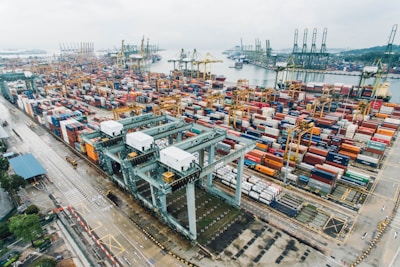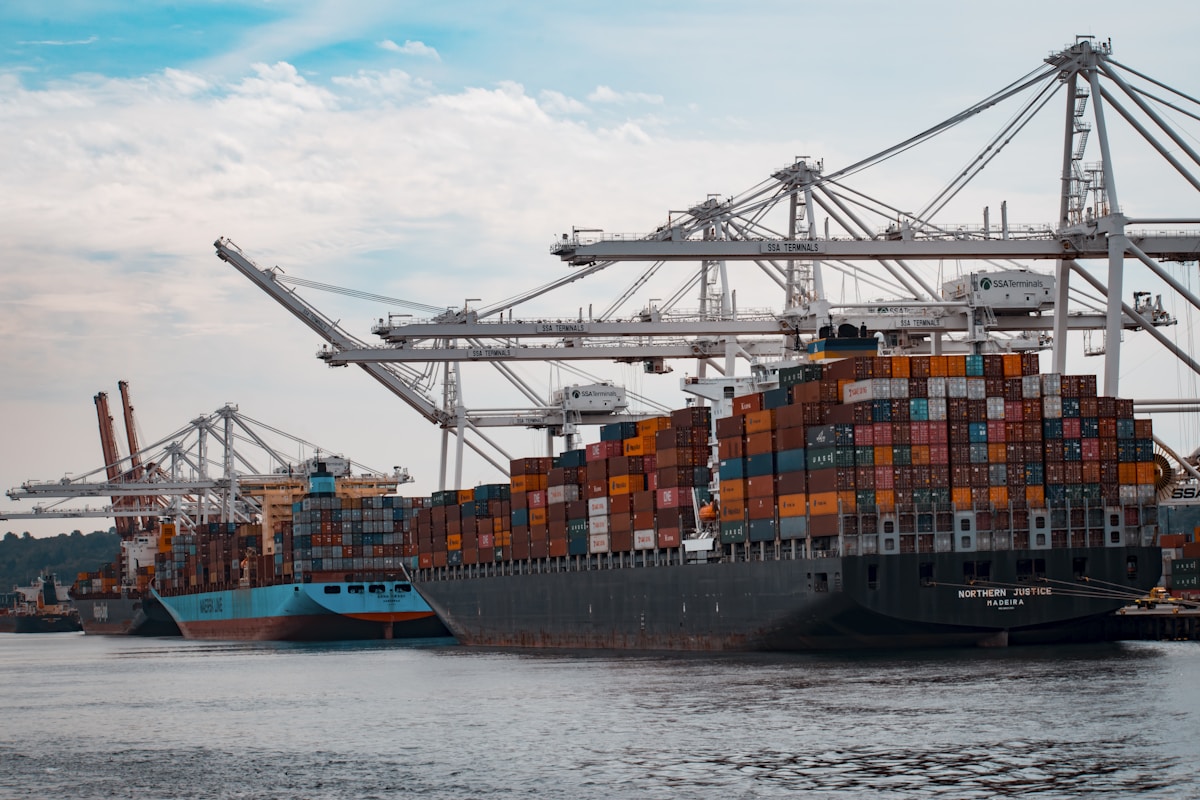
Container shipping forms the backbone of modern international trade, with over 90% of global cargo moving in containers. Yet many businesses treat container selection as an afterthought, leading to unnecessary costs, inefficient space utilization, and frustrated customers when shipments don't arrive as expected. Understanding container specifications, choosing the right size, and optimizing container utilization can significantly impact your bottom line. This guide provides comprehensive coverage of container shipping decisions that will help you make smarter logistics choices.
Understanding Standard Container Specifications
The shipping industry standardized containers decades ago to enable efficient intermodal transport—moving containers seamlessly between ships, trains, and trucks. The 20-foot and 40-foot containers are the two most common sizes, and understanding their specifications is essential for proper planning.
A standard 20-foot container, also called a Twenty-foot Equivalent Unit (TEU), provides approximately 33 cubic meters (1,169 cubic feet) of volume and can carry up to about 21-23 metric tons of cargo depending on the shipping line and route. Internal dimensions are roughly 5.9 meters long, 2.35 meters wide, and 2.39 meters high. The door opening is about 2.34 meters wide and 2.28 meters high. These dimensions matter when loading irregularly shaped cargo or when cube utilization is critical.
A standard 40-foot container, called a Forty-foot Equivalent Unit (FEU), offers roughly double the capacity—about 67 cubic meters (2,366 cubic feet) of volume. High cube containers add an extra 30 centimeters of height, providing even more volume for lightweight, voluminous cargo. The 40-foot container can typically carry 26-28 metric tons of cargo, though weight limits vary by shipping line and route regulations.
Cost Comparison: 20ft vs 40ft
The most common misconception is that a 40-foot container costs exactly twice as much as a 20-foot container. In reality, the cost differential is typically only 50-80% more for the larger container. This means that on a per-unit basis, 40-foot containers usually offer better economics if you have enough cargo to fill them.
Ocean freight rates are quoted per container, not per volume or weight. A 40-foot container from Shanghai to Los Angeles might cost $2,800 while a 20-foot container on the same route costs $1,800. If you need to ship 25 cubic meters of cargo, the 20-foot container at $1,800 means $72 per cubic meter. But if you can load 60 cubic meters into a 40-foot container for $3,200, that's only $53 per cubic meter—a 26% savings on freight.
However, don't assume bigger is always cheaper. If you only have 15 cubic meters of cargo, paying for a 40-foot container means paying for 45 cubic meters of empty space. Sometimes two 20-foot containers make more sense than one 40-foot, particularly when cargo is split between multiple customers or when delivery locations differ.
When to Use 20-Foot Containers
Twenty-foot containers are optimal for heavy, dense cargo that won't fill a 40-foot container's volume but might approach its weight limit. Machinery, steel products, concrete items, and other heavy commodities often fit well in 20-foot containers. If your cargo weighs over 20 tons but doesn't exceed 30 cubic meters, the 20-foot container may be your only practical option.
Some ports and terminals have restrictions that make 20-foot containers preferable. Certain less-developed ports may have limited equipment for handling 40-foot containers. When shipping to remote destinations or through transshipment ports with congestion, 20-foot containers sometimes offer more routing flexibility.
For businesses starting in import-export or testing new markets, 20-foot containers reduce capital requirements. You only pay for the space you need, and smaller minimum order quantities from suppliers may be sufficient. This reduces inventory risk while you're learning market dynamics.
When to Use 40-Foot Containers
Forty-foot containers make sense when you have sufficient cargo volume to fill them efficiently. If your typical order quantity naturally fills 30+ cubic meters, the 40-foot container almost always offers better economics. The per-unit savings often outweigh the additional capital required.
Lightweight, voluminous cargo benefits most from 40-foot containers. Consumer goods, textiles, electronics, and other items that are relatively light but take up significant space achieve excellent economics in larger containers. A 40-foot container can carry the equivalent of several smaller shipments, dramatically reducing per-unit freight costs.
Consolidated shipments from multiple suppliers can fill larger containers efficiently. If you're working with several vendors in the same region, coordinating deliveries to a freight forwarder's consolidation warehouse can enable full 40-foot container loads at better rates than multiple smaller shipments.
Special Container Types and Their Uses
Beyond standard dry containers, specialized containers serve specific cargo requirements. Reefer containers (refrigerated) maintain temperatures from -25°C to +25°C for perishable goods like food, pharmaceuticals, and certain chemicals. These containers are essential for international trade in products requiring cold chain management.
High cube containers add height for voluminous cargo. With an extra 30 centimeters compared to standard containers, high cubes are popular for lightweight items like textiles, electronics packaging, and other high-volume, lower-weight products. The modest height increase provides meaningful additional capacity without requiring special handling equipment.
Open top containers without fixed roofs accommodate cargo that must be loaded from above—machinery, vehicles, or other items that won't fit through standard doors. Flat rack containers with collapsible or fixed ends handle oversized cargo that extends beyond container dimensions. Tank containers carry liquids in standardized steel tanks within container frames.
Optimizing Container Utilization
Regardless of which container size you choose, maximizing utilization reduces per-unit costs. Efficient loading patterns, proper cargo securing, and thoughtful space planning all contribute to better container utilization.
Start by creating loading plans before cargo reaches the port. Calculate cubic utilization based on actual cargo dimensions, not estimated packed volumes. Leave minimal void space by using the container's full width and height. Stack cargo systematically, placing heavier items on the bottom and lighter, more fragile items on top.
Consider dimensional weight pricing that some carriers use. If your cargo is lightweight but voluminous, you may pay based on dimensional weight rather than actual weight. In these cases, maximizing every cubic centimeter provides direct cost benefits.
Documentation and Customs Considerations
Container numbers appear on all shipping documents and customs declarations. The container number format (four-letter owner code, three-digit serial number, and check digit) allows tracking throughout the shipping process. Your documentation must accurately reflect container numbers to prevent customs delays.
Customs declarations typically include container numbers, seal numbers, and counts. Ensuring these match physical reality prevents holdovers at customs. Seal integrity is critical—once sealed, containers shouldn't be opened without proper documentation. Broken seals raise security concerns and trigger inspections.
Working with Freight Forwarders on Container Selection
Experienced freight forwarders provide valuable guidance on container selection based on your specific cargo and routing. They understand which containers are available at origin ports, which shipping lines offer better rates for specific container types, and how to optimize container selection for cost and transit time.
Discuss your cargo characteristics honestly with your forwarder: actual weight and dimensions, special handling requirements, delivery deadlines, and budget constraints. With this information, forwarders can recommend optimal container strategies that balance multiple factors.
Conclusion
Container selection significantly impacts your logistics costs and operational efficiency. The right choice depends on cargo characteristics, volume, weight, and routing. Generally, 40-foot containers offer better economics for larger volumes, while 20-foot containers provide flexibility for smaller shipments or heavier cargo. Special container types serve unique requirements. Work with experienced partners to optimize container strategy for your specific situation.
Continue exploring logistics topics with articles on freight forwarder selection and shipping methods comparison.