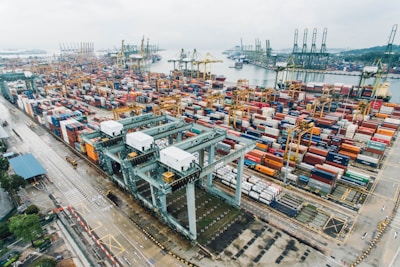
Global supply chains represent the operational backbone of international trading businesses. A well-designed supply chain reliably delivers products to customers on time and at targeted cost levels. A poorly designed supply chain creates chronic problems—stockouts, excess inventory, quality issues, and cost overruns—that erode competitiveness and customer relationships. Building excellent supply chains requires systematic attention to supplier relationships, logistics networks, inventory management, and continuous improvement. This guide provides frameworks for designing and managing supply chains that support business growth.
Supply Chain Design Fundamentals
Supply chain design establishes the structural framework within which daily operations occur. Design decisions create constraints that persist for years—choosing suppliers, establishing logistics routes, determining inventory locations. Taking time to design thoughtfully prevents costly redesigns later.
Network configuration determines how goods flow from origins to destinations. Direct shipment from supplier to customer provides simplicity but may create longer lead times. Hub-and-spoke networks consolidate inventory at central locations, reducing total inventory needed but adding handling steps. Each configuration trades off simplicity against efficiency.
Inventory positioning determines where safety stock is held. Holding inventory close to customers enables fast response but ties up capital in multiple locations. Centralizing inventory reduces total safety stock needed but extends delivery times. The right balance depends on customer service requirements and inventory carrying costs.
Sourcing strategy determines which suppliers provide which products. Single sourcing creates simplicity but concentration risk. Multiple sourcing provides resilience but increases management complexity and may sacrifice volume discounts. Strategic sourcing matches supplier selection to product importance and risk profile.
Supplier Network Development
Suppliers form the foundation of supply chain capability. The quality of supplier relationships determines whether your supply chain delivers reliably or constantly struggles.
Supplier capability assessment evaluates capacity, quality systems, financial stability, and strategic fit. Assessment should occur before engaging suppliers and periodically throughout relationships. Suppliers meeting today's requirements may struggle as volumes grow; regular reassessment identifies evolving capabilities and limitations.
Supplier development improves capabilities over time. Sharing forecasts, providing technical assistance, and building relationships creates alignment that benefits both parties. Developed suppliers become strategic partners rather than mere vendors—investing in their success because your success matters to them.
Supplier segmentation focuses management attention appropriately. Not all suppliers warrant the same attention. High-value, high-risk suppliers deserve intensive management. Routine suppliers with many alternatives can be managed more efficiently with standardized processes. Segmentation ensures resources go where they create most value.
Logistics Network Optimization
Logistics networks connect suppliers to customers through transportation and storage. Optimizing logistics networks dramatically affects total supply chain cost and customer service capability.
Transportation mode selection matches service requirements to cost efficiency. Air freight provides speed but costs more. Ocean freight offers economy but longer transit times. Ground transportation connects network nodes efficiently. Optimal mode selection balances these factors based on product characteristics and customer expectations.
Warehouse location determines shipping costs and delivery times from inventory locations to customer locations. More warehouses reduce shipping costs and delivery times but increase inventory requirements and management complexity. Location decisions should consider customer geography, transportation costs, and facility expenses.
Third-party logistics providers (3PLs) offer alternatives to owning logistics infrastructure. 3PLs provide expertise, scale economies, and flexibility that many traders couldn't achieve independently. Evaluating 3PL costs against internal capabilities determines whether outsourcing makes sense for your operation.
Inventory Management Principles
Inventory management balances service levels against capital requirements. Too little inventory creates stockouts and lost sales. Too much inventory ties up capital and increases risk of obsolescence.
Demand forecasting predicts future sales to inform inventory requirements. Forecasts will be wrong—that's inevitable. Effective inventory management builds safety stock to accommodate forecast errors while continuously improving forecast accuracy to reduce safety stock needs.
Reorder point systems trigger replenishment when inventory falls to designated levels. Setting reorder points requires balancing carrying costs against stockout risk. Sophisticated systems adjust reorder points dynamically based on demand patterns and supply lead time variability.
ABC analysis categorizes inventory by importance, typically using sales volume or margin contribution. High-importance A items warrant tighter control and more frequent review than lower-importance C items. This prioritization focuses management attention where it matters most.
Risk Management and Resilience
Supply chain disruptions create costly problems that good risk management prevents. Identifying risks and building resilience protects supply chain performance when unexpected events occur.
Risk identification catalogs potential disruptions—supplier financial problems, natural disasters, transportation disruptions, regulatory changes. Not all risks are equally likely or impactful. Prioritize based on probability and consequence to focus mitigation efforts appropriately.
Buffer inventory provides cushion against supply disruptions. Strategic safety stock at vulnerable points in the supply chain maintains service even when upstream problems occur. Buffer sizing should reflect risk levels and the cost of being wrong.
Supplier diversification reduces concentration risk. When multiple qualified suppliers exist for critical products, disruption at one supplier doesn't cripple your supply chain. Diversification requires ongoing investment in alternative supplier relationships so alternatives are ready when needed.
Technology and Systems
Modern supply chain management relies on technology systems that provide visibility, enable coordination, and support decision-making. Selecting and implementing appropriate technology builds operational capability.
Enterprise resource planning (ERP) systems integrate core business processes—purchasing, inventory, sales, finance—into unified platforms. For trading companies, ERP systems often include international trade functionality like landed cost calculation and customs documentation.
Transportation management systems (TMS) optimize shipping decisions and manage carrier relationships. Even basic TMS functionality can significantly reduce transportation costs through better carrier selection and load optimization.
Supply chain visibility tools track inventory and shipments across network nodes, providing real-time awareness of supply chain status. Visibility enables proactive exception management—addressing problems before they become customer impacts.
Continuous Improvement
Excellent supply chains are built through ongoing improvement rather than one-time design. Establishing improvement disciplines ensures supply chain performance keeps pace with business requirements.
Performance metrics provide feedback about how well the supply chain is operating. Key metrics include on-time delivery rates, inventory turns, landed costs, and quality levels. Regular metric review identifies improvement opportunities and tracks progress.
Root cause analysis investigates problems to identify underlying causes rather than just addressing symptoms. When disruptions occur, understanding why enables preventing recurrence. Superficial problem-solving leads to repeated issues.
Best practice adoption incorporates learning from industry leaders and internal successes. What works elsewhere may apply in your operation; what works in one part of your business may transfer to other areas. Continuous learning keeps the supply chain advancing rather than stagnating.
Conclusion
Building effective global supply chains requires systematic attention to design, relationships, operations, and continuous improvement. The frameworks provided here guide decisions that create supply chains capable of supporting business growth. Start with fundamentals—supplier relationships and logistics networks—and build sophistication as the business matures. The investment in supply chain excellence pays returns through reliable customer service and sustainable cost structures.
Continue exploring with articles on supplier relationships and logistics optimization.